Creating the perfect garden layout can elevate your outdoor space into a welcoming retreat. From choosing the right plants to setting up functional areas for relaxation or play, a well-planned garden enhances not just aesthetics but also boosts your gardening experience. Let’s break down some effective strategies for designing a garden that works for you!
Incorporating Vertical Gardening Techniques
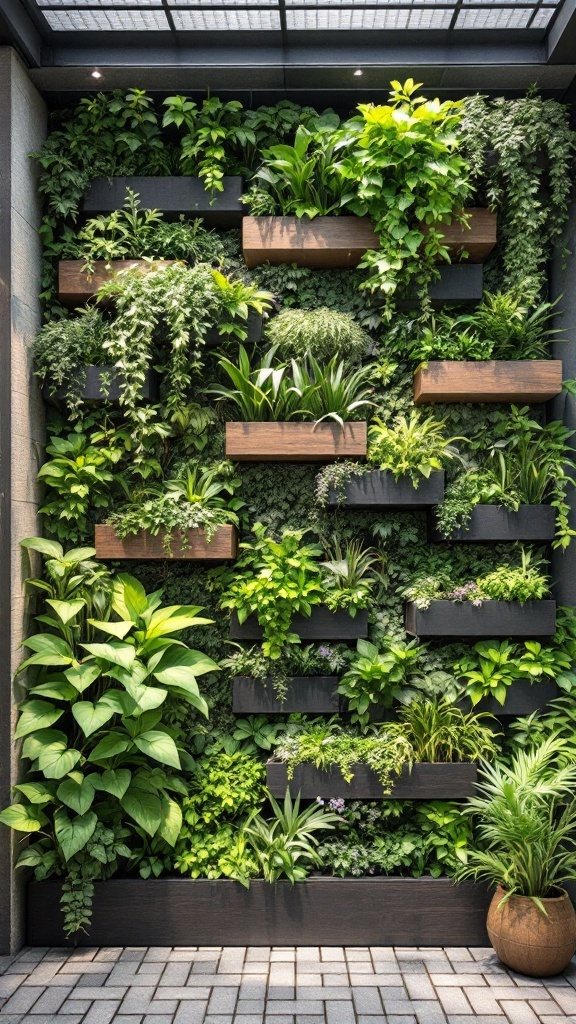
Vertical gardening is a fantastic way to maximize your space while adding a splash of greenery. The image shows a stunning green wall that utilizes various plants in tiered wooden and black planters. This setup creates a vibrant, lush display that can transform any ordinary wall into a living masterpiece.
Using vertical gardening techniques not only enhances aesthetics but also improves air quality. By stacking plants upwards, you can save valuable ground space for other uses. This is especially useful in small gardens or urban settings where every inch counts.
When planning your vertical garden, think about the types of plants you like. Choose ones that thrive in your climate and light conditions. Ferns and trailing plants, as seen in the image, can offer a beautiful cascade effect, while more structured plants can add height and definition.
Don’t forget about the irrigation system. A drip system can ensure that each plant gets the right amount of water without waste. With a little creativity and planning, your vertical garden can flourish beautifully!
Incorporating Wildlife-Friendly Features
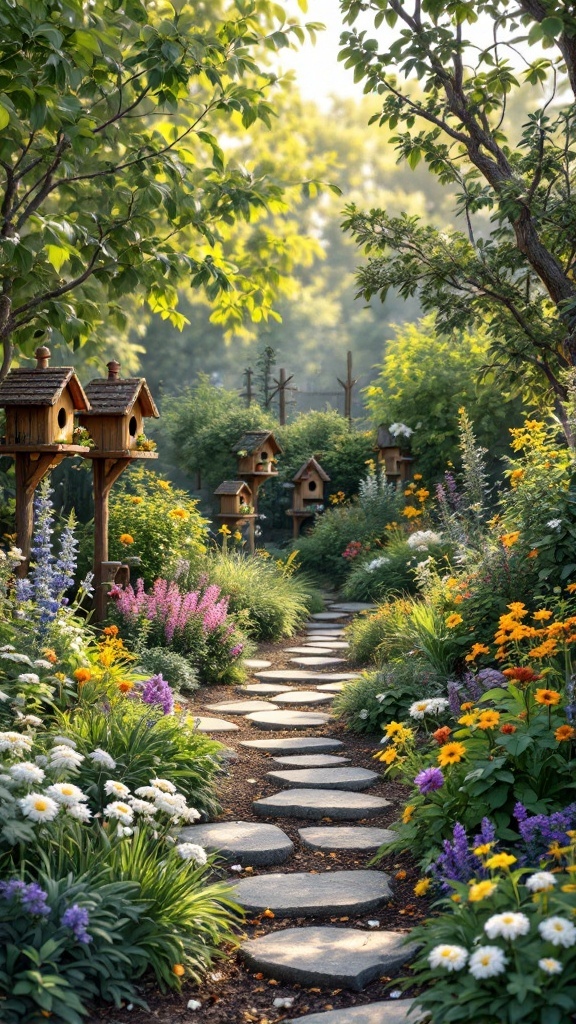
Creating a garden that’s friendly to wildlife can be a fulfilling experience. The image showcases a lovely pathway surrounded by colorful flowers and birdhouses, making it a perfect habitat for various creatures.
The vibrant blooms attract bees and butterflies, which are essential for pollination. Adding native plants can help support local wildlife, providing food and shelter.
Birdhouses, like those seen in the image, offer safe nesting spots for birds. Make sure to choose designs that cater to local species. This way, you can enjoy their songs and vibrant colors right in your backyard.
Don’t forget about water features! A small birdbath or pond can be a great addition. It not only attracts birds but also provides a drinking spot for other animals.
Overall, combining beautiful plants, inviting spaces, and functional elements creates a garden that is both aesthetically pleasing and supportive of wildlife.
Utilizing Raised Garden Beds Effectively
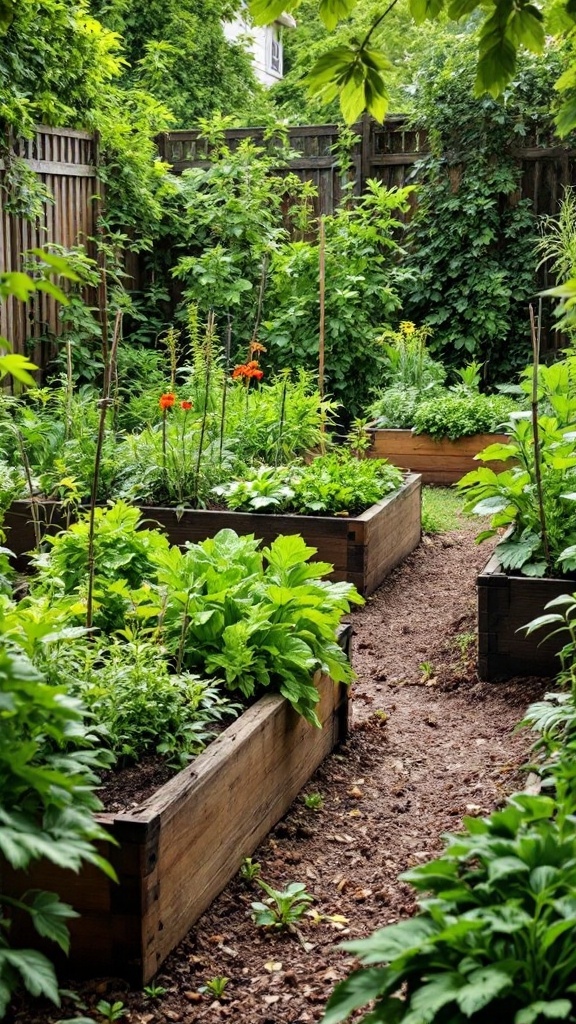
Raised garden beds are a fantastic way to optimize your planting space and keep your garden organized. The image shows a lush garden filled with vibrant greens and pops of color, emphasizing the beauty of raised beds. These structures not only add aesthetic appeal but also improve soil drainage and make gardening easier on your back.
One of the key advantages of raised garden beds is their ability to warm up quicker in the spring. This helps you get a jump start on your planting. In the picture, you can see how well-defined the beds are, creating clear pathways for easy access. This layout is ideal for maintaining your plants without stepping on the soil.
Incorporating a variety of plants, like the colorful flowers visible, can attract beneficial insects. When designing your garden, think about mixing vegetables and herbs for a diverse ecosystem. Companion planting can also deter pests and enhance growth. The image captures a thriving garden, showcasing how raised beds can be productive and beautiful.
To create a successful raised bed garden, choose materials that are durable and safe for growing food. Cedar and redwood are popular choices, as they resist rot. Make sure to fill them with nutrient-rich soil and compost. Keeping your garden tidy, as seen in the image, allows you to enjoy the fruits of your labor while making maintenance simpler.
Maximizing Small Spaces with Container Gardening
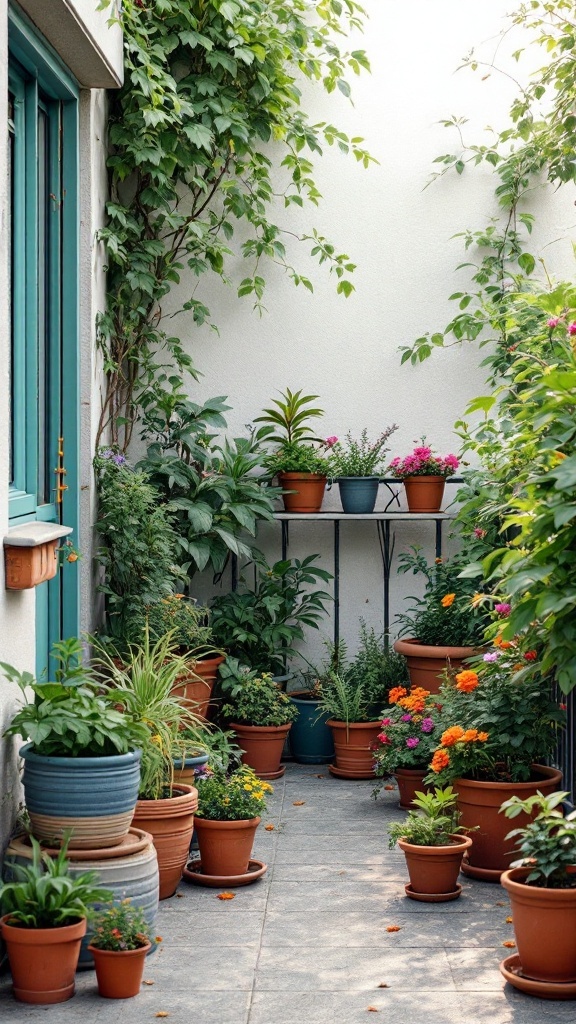
Container gardening is a fantastic way to make the most of limited space. The image shows a charming small garden filled with colorful potted plants. This setup provides a visual feast, with different heights and textures adding depth to the scene.
Using containers allows you to create a garden wherever you have a bit of room. Whether it’s a balcony, patio, or even a narrow walkway, you can transform any small area into a vibrant garden. The variety of pots, from terracotta to ceramic, adds personality while also giving plants the right drainage they need.
Arranging pots in layers or on shelves, as seen in the image, helps utilize vertical space. This technique not only maximizes your planting area but also makes it easier to care for plants. You can reach everything without stepping on delicate soil.
Consider mixing herbs, flowers, and shrubs to create a diverse and lively atmosphere. The pops of color from flowers alongside lush green leaves create an inviting look. Plus, having herbs nearby makes cooking more enjoyable!
Designing Pathways for Accessibility
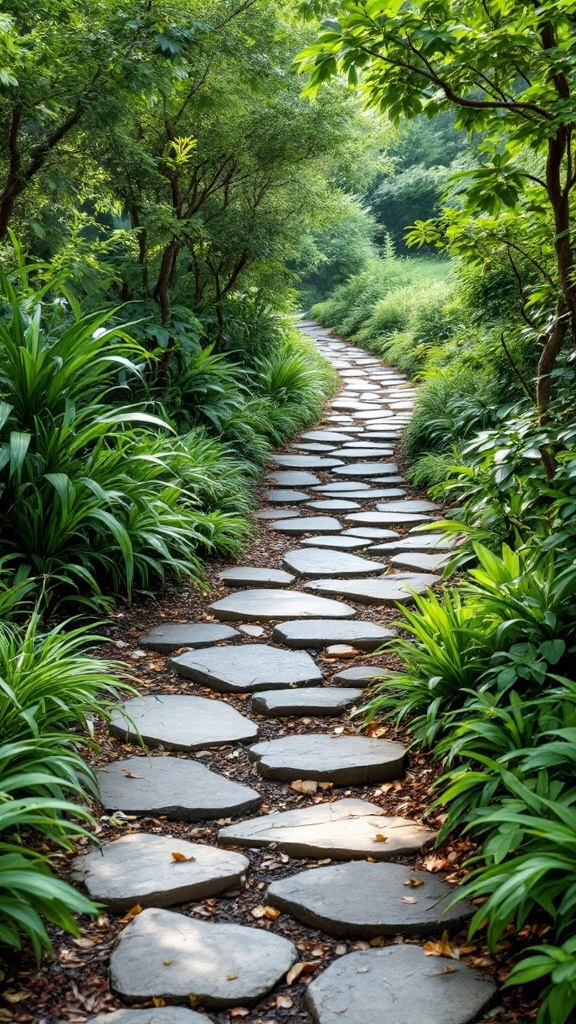
Creating pathways in your garden is not just about looks; it’s about making sure everyone can enjoy the space. The image shows a winding stone path, flanked by lush greenery, inviting you to explore. The stones are laid out in a way that allows easy walking, which is essential for all visitors, including those with mobility challenges.
When designing your pathways, think about the width and surface. A path that is too narrow can be difficult for wheelchairs or strollers. Smooth surfaces are easier to navigate, and materials like flagstone provide a sturdy base. A winding path, like the one in the image, can lead to surprises around every corner, making your garden feel larger and more inviting.
Adding plants along the sides, as shown, can enhance the experience. Choose low-maintenance greenery that doesn’t obstruct the path or become a tripping hazard. Consider using native plants, as they are often easier to care for and attract local pollinators, boosting the garden’s overall health.
Lighting is another key factor. Well-lit pathways ensure safety during evening strolls. Solar lights can be a great addition, providing both illumination and charm. Overall, designing accessible pathways in your garden creates a welcoming environment for everyone, encouraging more time spent outdoors.
Understanding Your Space and Sunlight
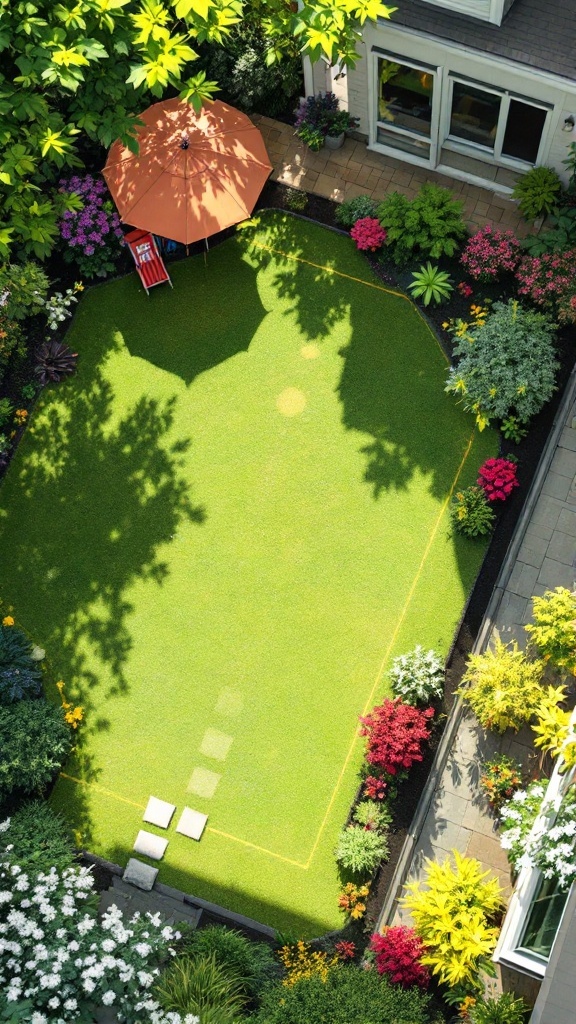
When planning your garden layout, it’s essential to understand your space and how sunlight plays a role. The image shows a lovely garden with vibrant flowers and a cozy seating area under an umbrella. This setup highlights how thoughtful planning can create a serene space.
First, take a look at the size and shape of your garden. The green area in the image provides a clear open space for activities, surrounded by colorful plants. This balance creates a harmonious vibe while allowing for easy movement.
Next, consider the sunlight. Different plants require various amounts of sunlight. In the image, the well-lit areas are perfect for sun-loving flowers. By observing where the sun hits throughout the day, you can place plants where they’ll thrive best.
Lastly, think about the layout. The arrangement of flowers around the perimeter of the garden makes it inviting while keeping the center open. This layout encourages both functionality and beauty.
Choosing the Right Plant Combinations
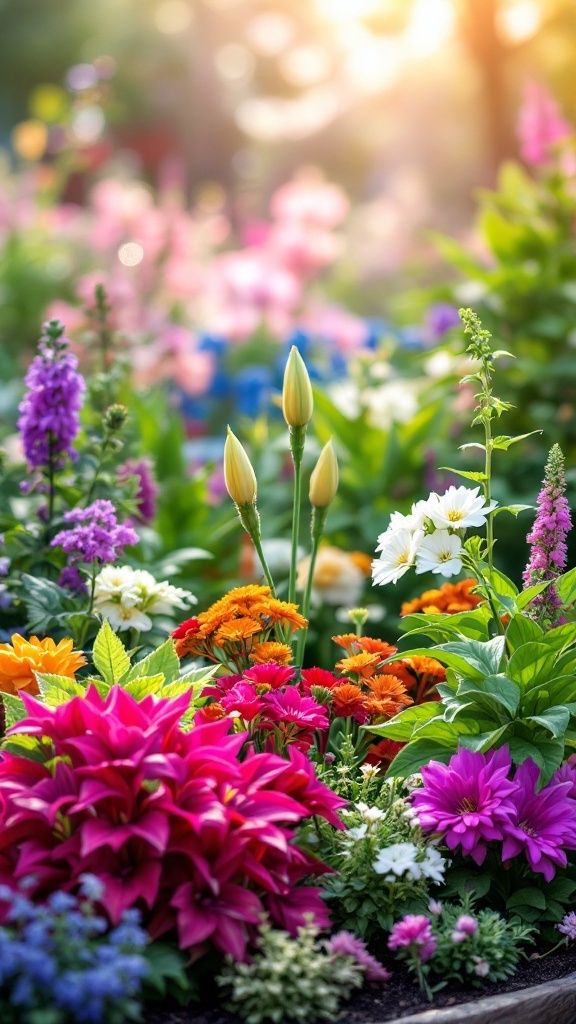
Creating a beautiful garden is all about pairing the right plants together. The image shows a vibrant mix of flowers that bring life and color to any space. Look at how the bright petals of the pink lilies stand out against the lush green backdrop. This mix makes for an eye-catching display.
Think about how different colors and textures can complement each other. For example, the deep purple flowers and cheerful orange blooms work together beautifully. These combinations can create a lively atmosphere, making your garden a delightful spot to relax.
When choosing plants, consider their growth habits too. Some flowers, like daisies and zinnias, can spread out and fill spaces nicely. Pairing taller plants with shorter ones adds dimension and helps create layers in your garden design. This not only makes the layout visually appealing but also maximizes space.
Don’t forget about bloom times! Mixing early and late bloomers ensures continuous color throughout the growing season. The fresh buds in the image indicate that there’s more to come, adding excitement to your garden. Planning for variety keeps things interesting and provides a feast for the eyes.
Creating Functional Zones in Your Garden
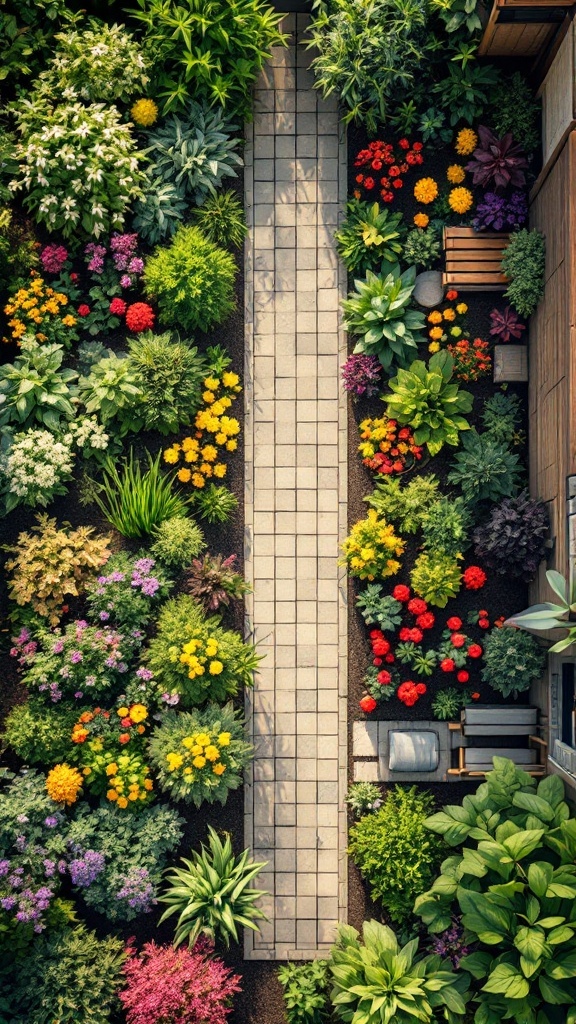
Taking a look at the image, we see a garden bursting with colors and life. The path running through the center invites you to explore what lies ahead. This layout is a great example of how to create functional zones in your garden.
On either side of the path, vibrant flowers and lush greenery create distinct areas. These zones can be tailored for different activities. For instance, one side might be perfect for relaxation with a seating area, while the other could be dedicated to growing a variety of plants. This approach enhances both the aesthetic appeal and usability of your garden.
Consider how the layout encourages movement. The path leads you through the garden, making it easy to enjoy each section. When planning your space, think about how you want to use it—whether for entertaining, gardening, or simply unwinding.
A layout like this also offers an opportunity to mix textures and colors. Different plant heights and types create visual interest, making each zone unique. You can enjoy a splash of color while also benefiting from the functional aspects of your garden.
In summary, using a clear path and designated areas can help you design a garden that is not only beautiful but also functional. This image showcases how to bring that vision to life.
Integrating Hardscapes for Structure and Beauty
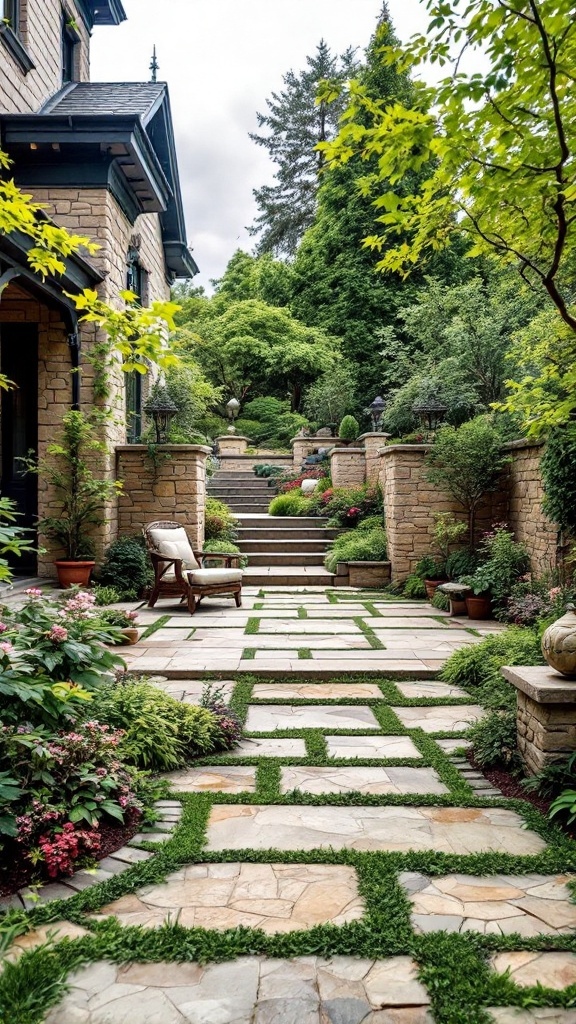
Hardscapes play a vital role in garden design. They offer structure and create pathways that guide the eye through your outdoor space. The image shows a beautifully laid stone pathway accented with lush greenery. This kind of layout makes your garden feel organized while still being inviting.
The combination of stone and grass creates a lovely contrast. The stones provide stability, while the greenery softens the edges. Notice how the plants around the path add color and life, enhancing the overall look. Incorporating seating areas, like the charming chair in the image, gives you a perfect spot to relax and enjoy your garden.
Each element in the design works together harmoniously. The stones lead you through the garden, encouraging exploration. You can also play with different materials to match your style, whether it’s rustic or modern. Hardscapes don’t just hold everything together; they add beauty and functionality too.
Planning for Maintenance and Growth
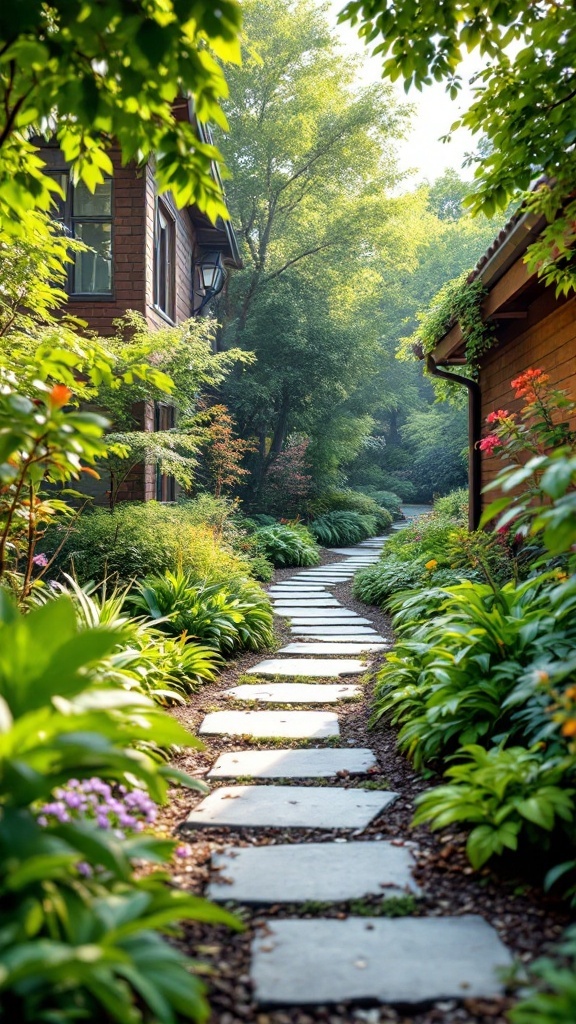
Looking at a garden layout like this one really highlights how careful planning can enhance both beauty and ease of maintenance. The stone pathway winds gently through lush greenery, making it easy to navigate without trampling on plants. This is key for keeping your garden healthy and vibrant.
The selection of plants alongside the path plays a significant role. Choosing native plants that thrive in your climate reduces the need for extra care. Notice how the colorful flowers peek through the foliage. They not only add charm but also attract beneficial insects, promoting a healthy ecosystem.
Regular maintenance is simplified when you have a well-thought-out layout. The path allows for easy access to all parts of the garden, making tasks like weeding and watering less of a chore. Plus, it encourages you to spend more time enjoying the space.
Incorporating varying plant heights and textures can create visual interest while also supporting different maintenance needs. Grouping plants with similar watering and sunlight requirements helps ensure that each thrives in its designated spot. This thoughtful approach can lead to a flourishing garden that brings joy year after year.
Seasonal Planting for Year-Round Interest
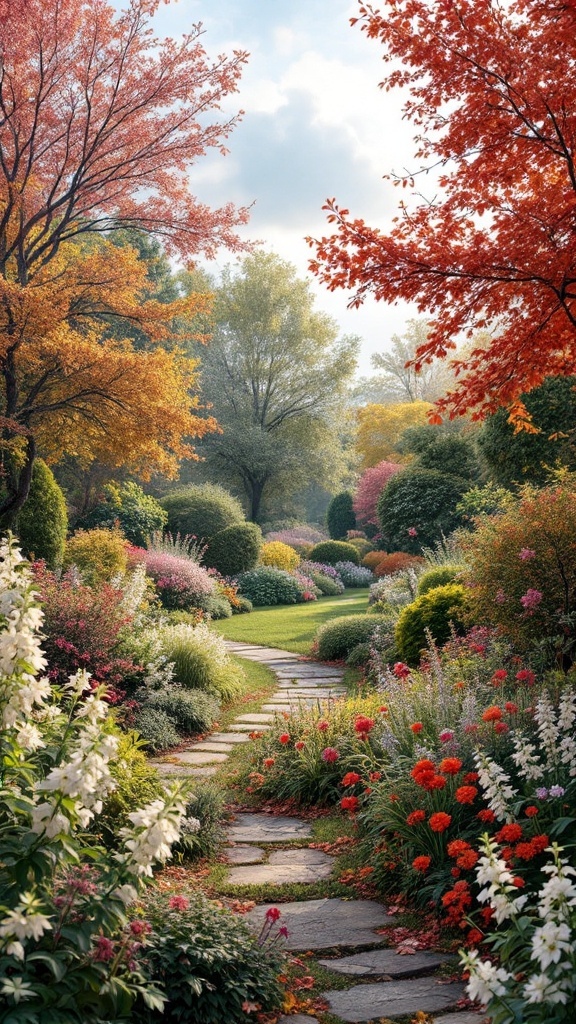
Creating a vibrant garden that flourishes all year requires thoughtful seasonal planting. In an image like this, you can see how different plants showcase their beauty across various seasons. The rich colors of autumn leaves blend seamlessly with blooming flowers, creating a stunning visual effect.
Choosing plants that bloom in different seasons helps maintain interest in your garden. For instance, spring bulbs can provide early color, while fall foliage adds warmth as the year winds down. You might consider layering your plants by height and bloom time for a dynamic look.
Incorporating evergreens can also provide structure during the winter months. They serve as a backdrop for other seasonal flowers, ensuring your garden looks alive even in the colder weather. This strategic planning makes for a welcoming space year-round.
Don’t forget to include perennials that bloom at various times to keep the garden lively. Mixing in annuals can fill in gaps and add splashes of color whenever needed. With the right selection, your garden can be a joyful retreat through every season.
Adding Water Features for Serenity
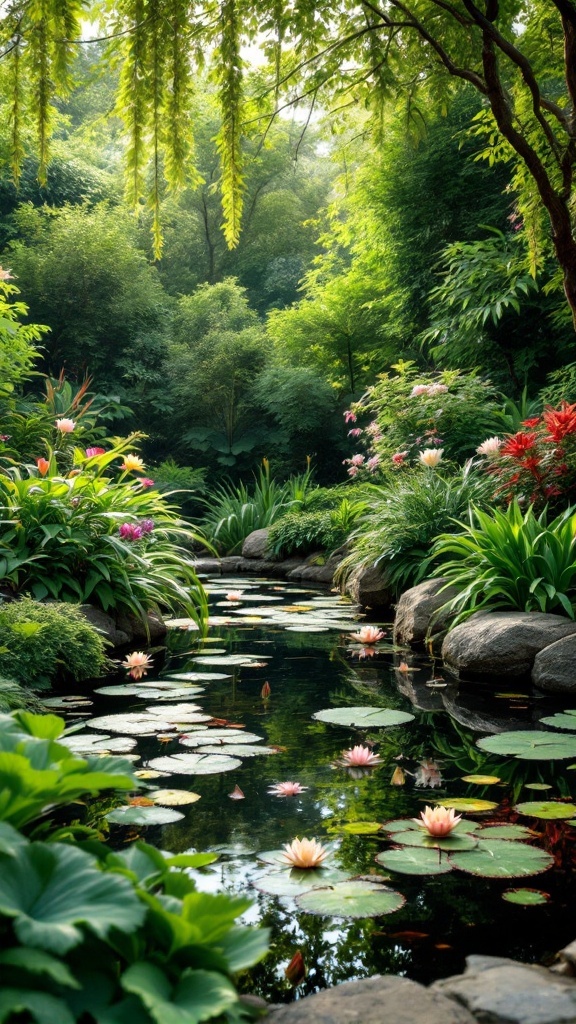
Water features can truly transform your garden. Picture a serene pond surrounded by lush greenery and colorful flowers. This kind of calm space invites both relaxation and a deeper connection with nature.
The image shows a peaceful waterway, dotted with lily pads and delicate blossoms. The gentle flow of water creates soothing sounds that can drown out the noise of everyday life. It’s a perfect spot to unwind with a book or simply enjoy the beauty around you.
Incorporating this kind of water feature doesn’t have to be complicated. Even a small fountain or a birdbath can bring a touch of tranquility. These elements not only look great but also attract wildlife, adding life to your garden.
Remember, the key is to create a space that feels inviting. Choose plants that thrive in moist areas, and consider the layout to ensure it complements your garden’s overall design. With a little thought, your garden can become a serene escape.